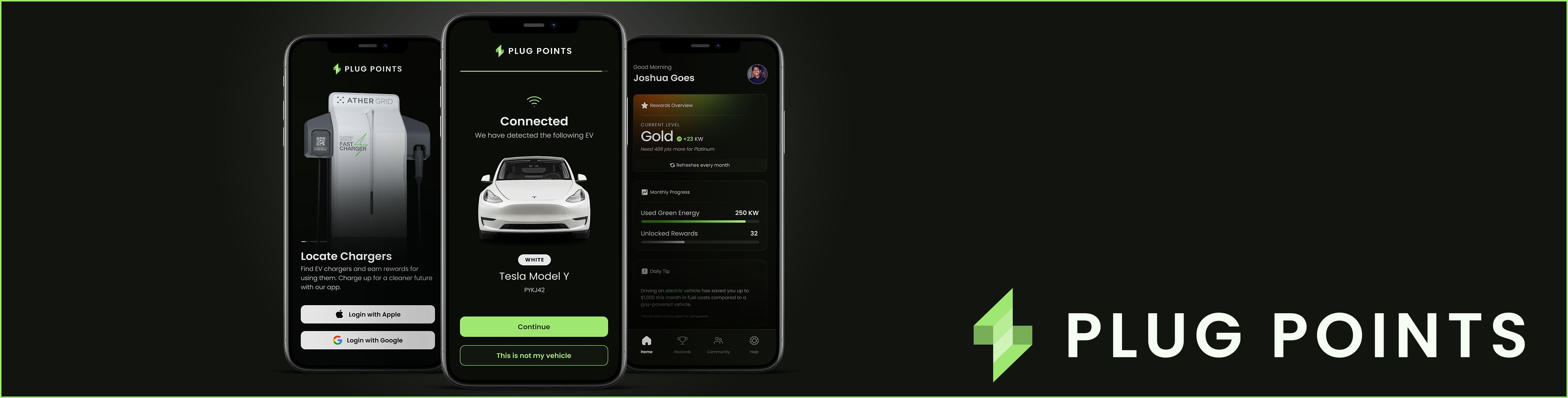
The global shift towards sustainable transportation is driving the adoption of Electric Vehicles (EVs). Plug Point is an innovative app that aims to educate potential vehicle buyers about the benefits of EVs while incentivizing them to make the switch, ultimately promoting sustainability and reducing carbon emissions. This case study delves into the UX design process that led to the creation of Plug Point.
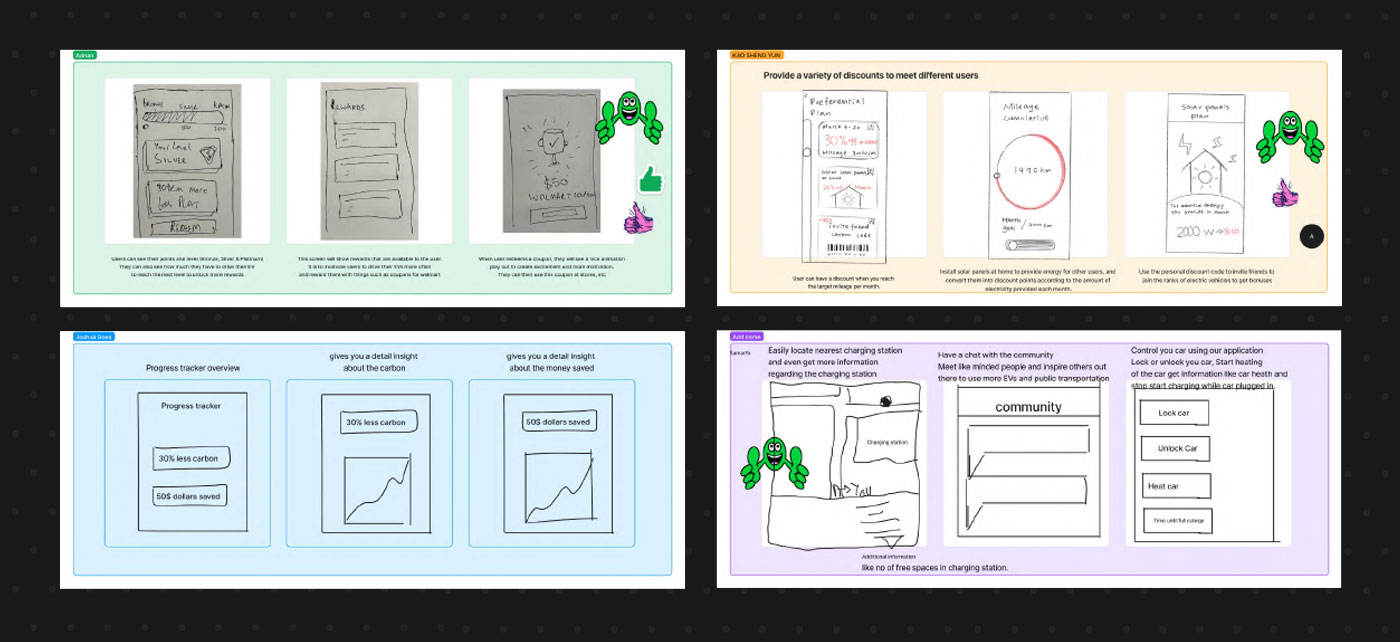
The team recognized that potential EV buyers often hesitate due to lack of knowledge about EVs and concerns about factors like range and charging infrastructure. To address these challenges, the team brainstormed initial ideas, including:
Rewarding users with points for using green transportation.
Providing a progress tracker to showcase environmental impact.
Showcasing accessories and upgrades for EVs.
Calculating cost savings when switching to an EV.
Estimating EV resale value.
Building a social community for EV enthusiasts.
Offering personal EV consultants for expert guidance.
The team envisioned Plug Point as a comprehensive platform with unique features:
Unique, exclusive information.
Real-time charging station data.
Special rewards like bill payments.
Government partnerships for incentives.
Data aggregation for EV market trends.
A thriving EV community.
Peer-to-peer EV sharing platform.
The team decided to design an app that educates users about EV benefits and incentivizes EV adoption. Key features included:
Clear educational content.
Tangible incentives (rewards and coupons).
Feedback system for reward progression.
Fostering a sense of community.
"Potential vehicle buyers who are hesitant to buy electric vehicles need a way to understand the benefits of EVs and be incentivized to make the switch to increase adoption and promote sustainability. How might we design an app that provides clear and concise information about the advantages of electric vehicles, while also incentivizing users to choose and use more EVs for a more sustainable future?"
"We believe that designing an app that educates and incentivizes users to switch to electric vehicles will lead to increased adoption and usage of EVs. We will know this is true when we see increased user engagement with the app, increased EV adoption rates, and positive feedback from users who have successfully made the switch to electric vehicles."
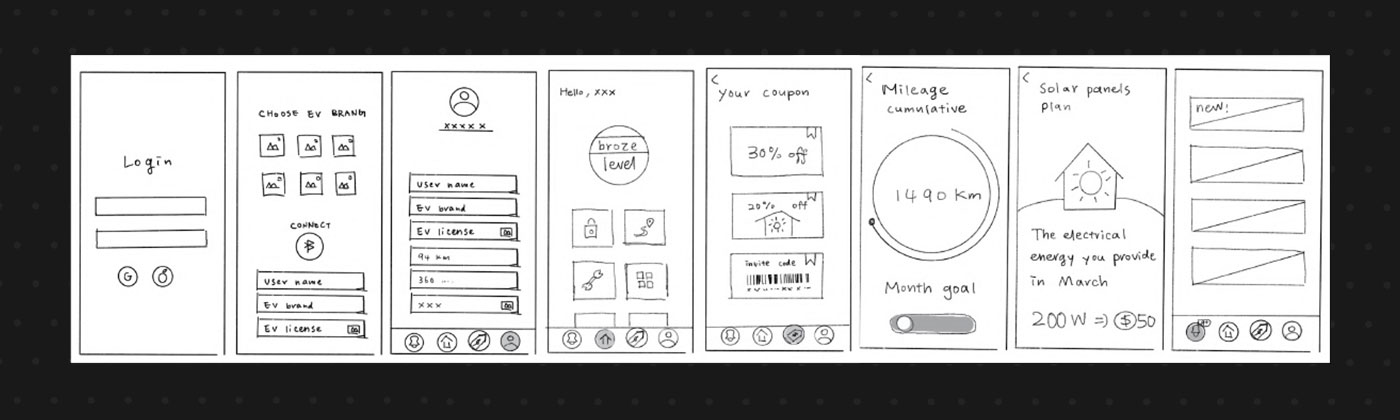
The team began by creating low-fidelity wireframes to visualize the app's structure and user flow. These wireframes served as a foundation for the app's design, allowing for rapid iteration and early user testing.

Designing User-Friendly Interfaces:
The final user interfaces were designed with a focus on clarity and user-friendliness. The app included:
Clear educational content about EV benefits.
A rewards system with points and coupons.
A progression tracker for rewards.
A community feature to connect with other EV enthusiasts.
Incentivizing EV Adoption:
Plug Point succeeded in creating an app that not only educated potential EV buyers but also provided tangible incentives for making the switch. Users were rewarded with points and coupons for choosing electric vehicles, and a progression tracker displayed their journey toward unlocking more rewards. The app fostered a sense of community among EV enthusiasts, encouraging knowledge sharing and support.

Plug Point exemplifies a UX design effort to address a critical challenge: incentivizing electric vehicle adoption. By providing clear education, tangible rewards, and a sense of community, Plug Point successfully promotes sustainability and encourages users to make the switch to electric vehicles. The app stands as a user-friendly, engaging, and impactful tool in the effort to combat climate change and reduce carbon emission
Full Prototype